PayPal (PYPL) Might Be a UFO!

These credit cards are an amazing deal, I can buy whatever I want and I don't have to use any cash! That means everything is basically free...right? Either way, I'm suspicious it might be a UFO! But before I discuss that...
What's the Word on the Street?
As of me writing this, the Dow and Russell are down, while the S&P is flat and the Nasdaq is up. Overall it's been a solid week for the market with a downward surprise with the PPI (Producer Price Index) on Wednesday and the almost-at-expectations (but slightly hot) CPI (Consumer Price Index) yesterday.
Consumer sentiment released this morning and came in below expectations. All of this still points to the Federal Reserve cutting interest rates next week on Wednesday, which has kept investors in a good mood.
PayPal (PYPL)
What Is It?
PayPal Holdings, Inc. engages in the development of technology platforms that enable digital payments and simplifies commerce experiences on behalf of merchants and consumers worldwide. Its solutions include PayPal, PayPal Credit, Braintree, Venmo, Xoom, and Paydiant products. The firm also enables consumers to exchange funds with merchants using funding sources, which include bank account, PayPal account balance, PayPal Credit account, credit, and debit card or other stored value products. It operates through United States and Other Countries geographical segments. The company was founded in December 1998 and is headquartered in San Jose, CA. The listed name for PYPL is PayPal Holdings, Inc. Common Stock.
Why Is It a Possible UFO?
Primarily its current share price relative to its fair value and what other option traders expect are the reasons PYPL could be a UFO.
What About Recent News?
There isn't a lot of news related to PayPal. A few weeks ago Germany blocked payments because of a widespread disruption. But PayPal is basically a play on consumers. Consumer sentiment came back lower than expected today, but CPI showed people are still spending. With PayPal looking undervalued and the economy still in relatively fine shape (and hopefully expected to get better?), I think PayPal can still work as a trade.
What's the Current Price?
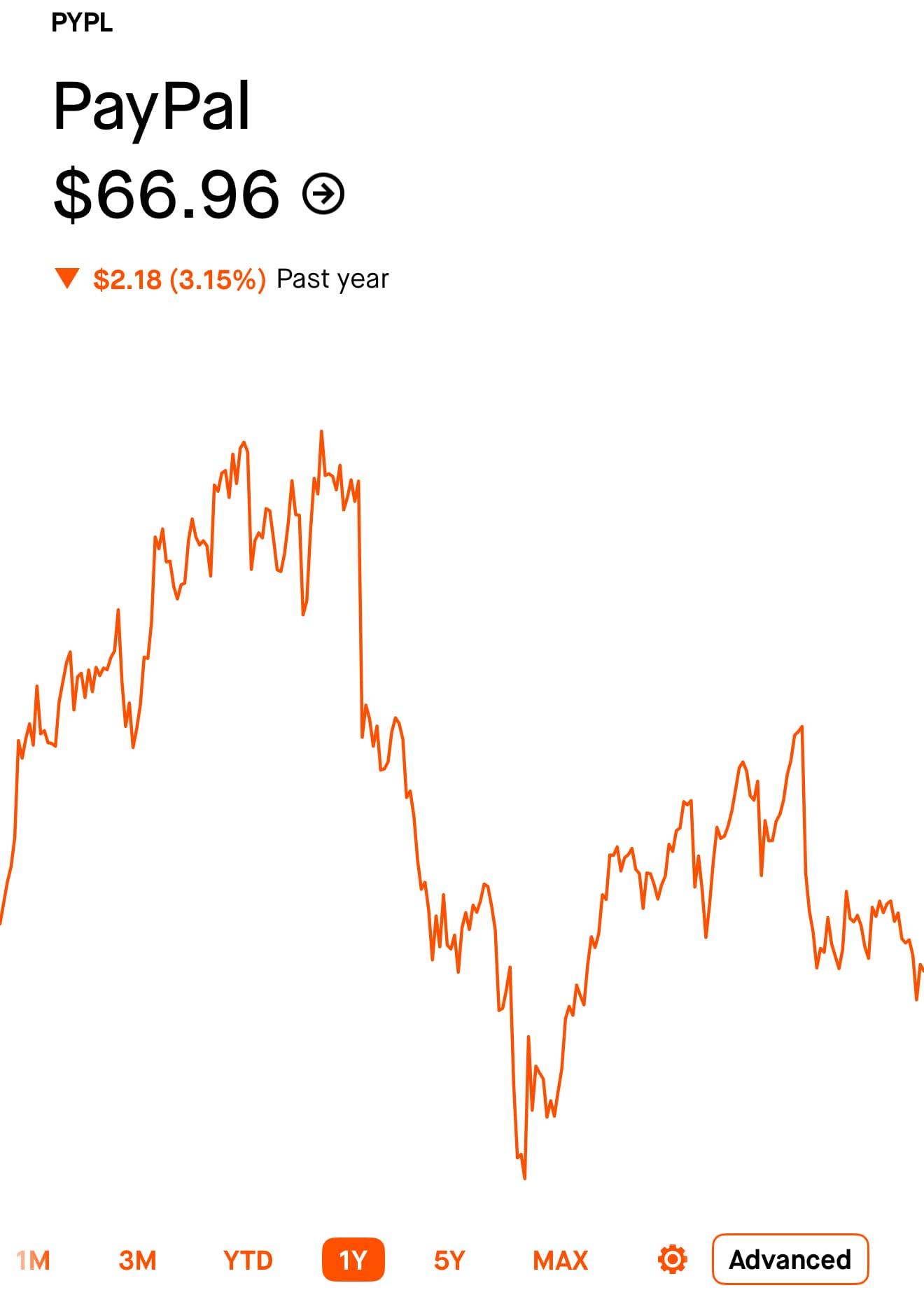
Basically flat in the past 12 months, but down on the year by ~22%. PYPL has also been down ~10% in the past 3 months, ~3% in the past month, ~2% in the past week, and down on the day by about half a percent.
What’s the Fair Value?
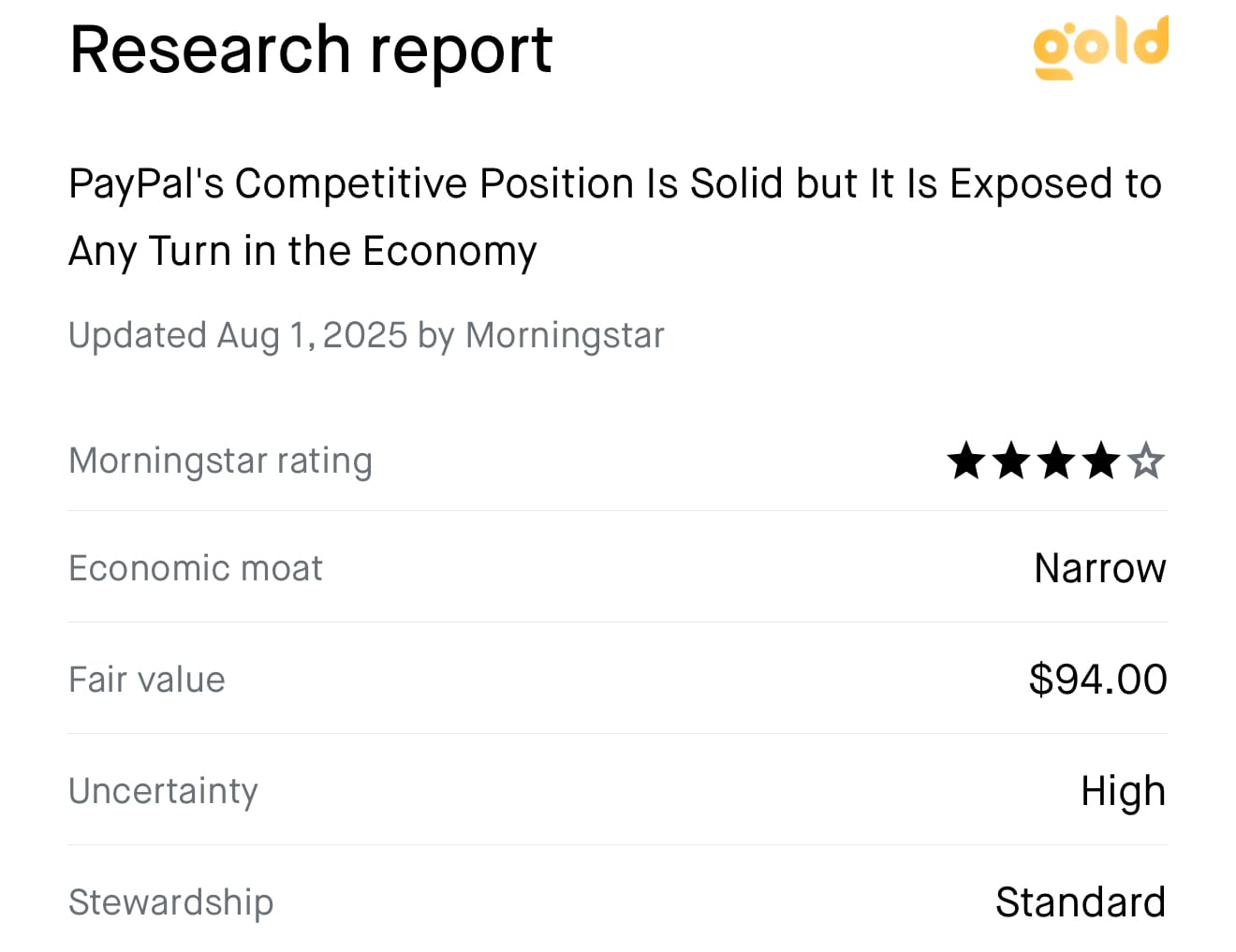
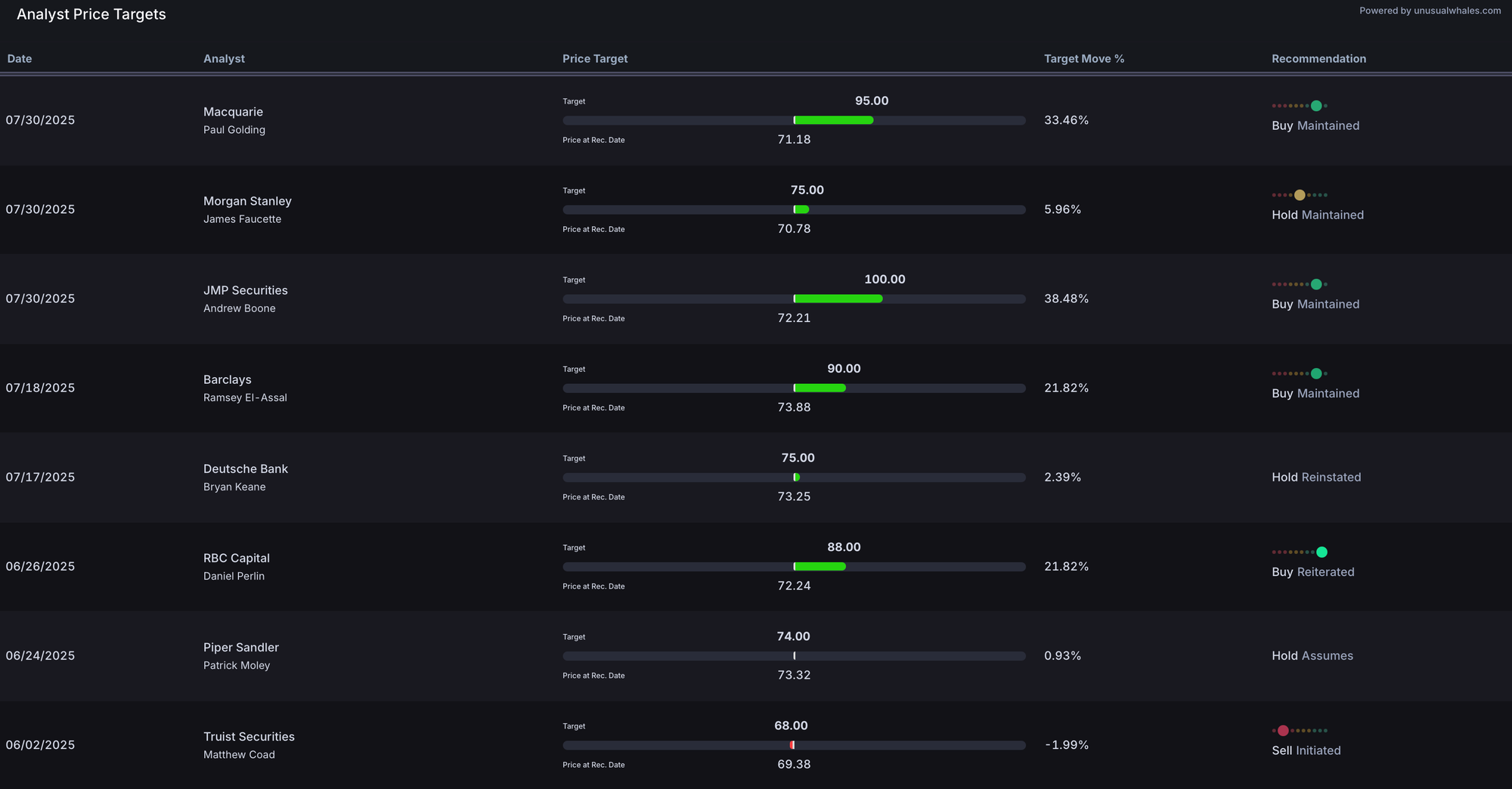
Analyst fair value ratings for PYPL
I’d first like to emphasize that fair value is subjective. Many analysts at many banks and institutions rate stocks differently and assign fair value in their own unique way. So, what I like to do is take all the recent fair values since the most recent earnings report and average them. In this case…
Since PYPL's most recent earnings report on 07/29/2025, it has received 4 ratings and taking the average, the fair value might be somewhere around: $91.
2 ratings are a Buy, 1 is a Hold, and the Morningstar rating is unknown. The lowest price target is $75, while the highest is $100.
What Do Options Traders Expect?
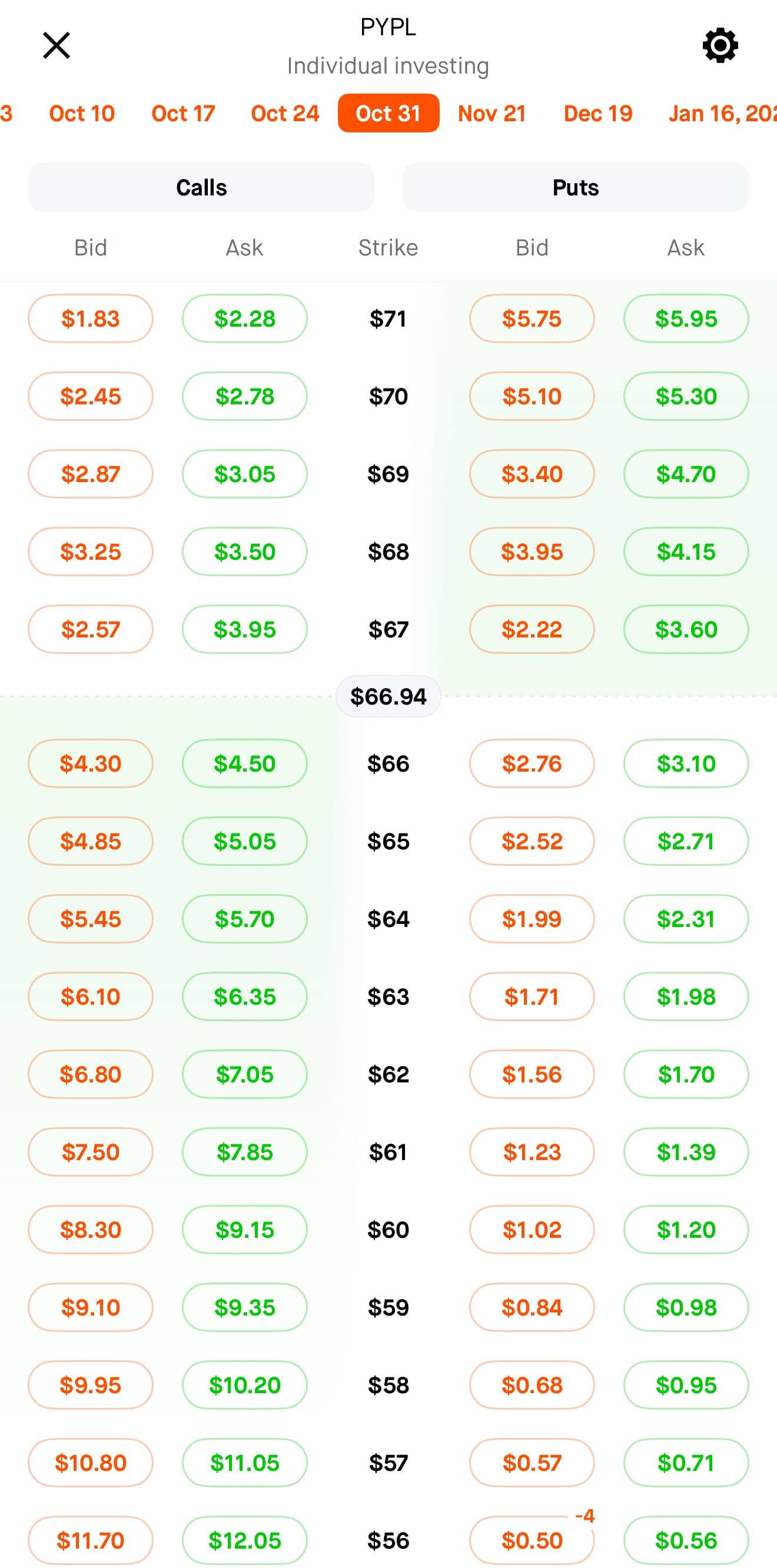
Calls are trading over equidistant Puts, which means traders think there is a chance to the upside. You can see because… forget about the green columns and focus on the red. Notice how on the right side for the $64 Put it says $1.99, it’s $2.87 for the equidistant Call at $69.
The premium (the credit you receive for executing the trade) is currently less for selling Puts, as opposed to selling Calls. Basically because of that, option traders expect the stock to go up, rather than down.
How About Volatility?
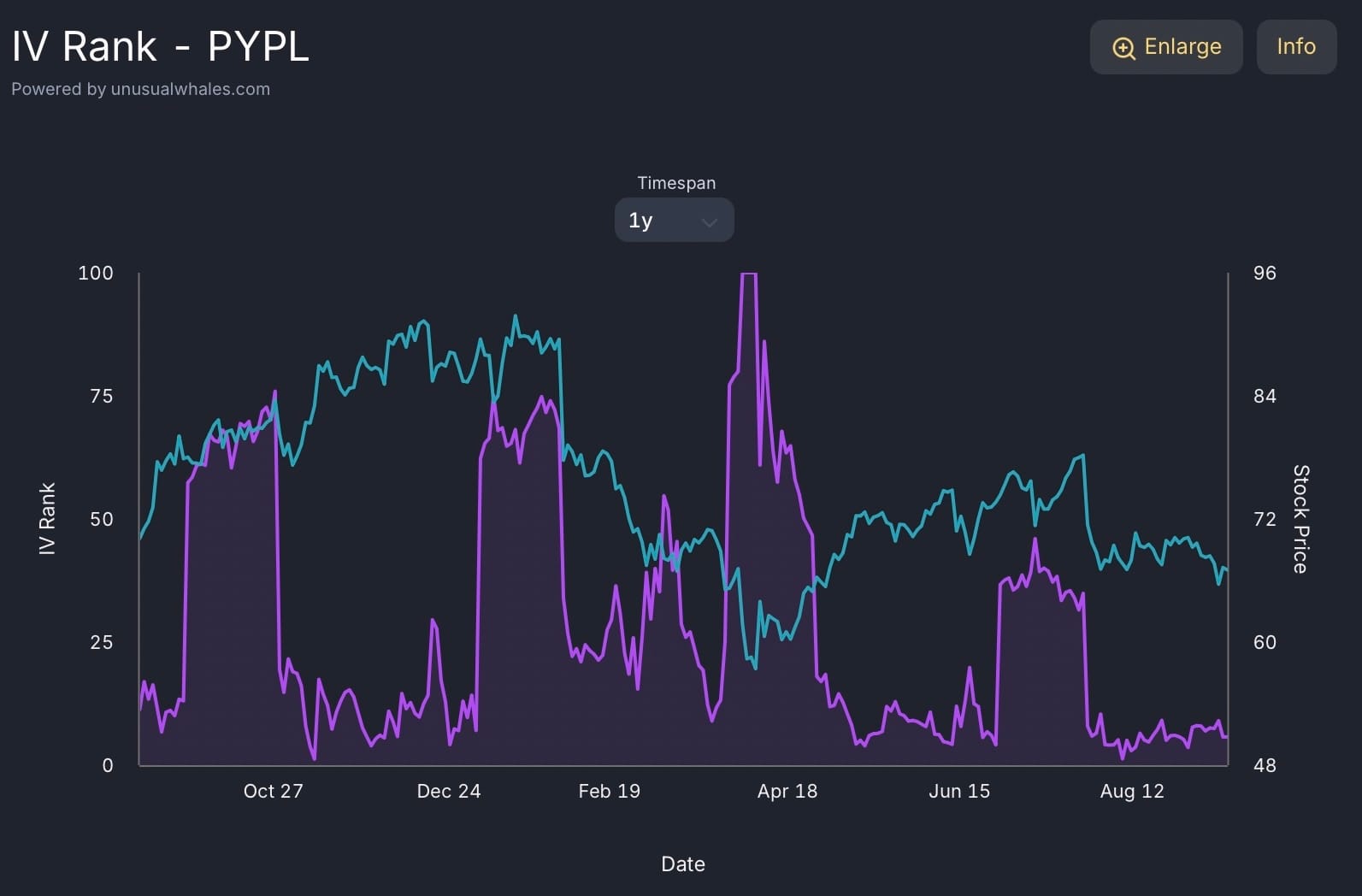
The IV rank (the purple line) for PYPL (stock price in blue) is currently hovering around 5.76, which is very low (IV rank goes from 0-100). This makes short strategies (which are what I prefer) less attractive.
What's the Trade?
My preferred trade is a variation of the wheel without the rolling, AKA cash-secured puts. I typically like to target stocks that offer a dividend and are below fair value.
Why a dividend? If the trade results in assignment and I’m on the hook for X amount of shares, I can at least be satisfied knowing I picked a (hopefully under fair value) company that will pay me a small amount while I run the other side of the trade AKA covered calls.
PYPL does not offer a dividend, but that’s not a dealbreaker!
It’s a fairly low-risk strategy (all options trading is risky!), that has a higher probability of success, but requires a higher amount of collateral.
So if you saw the most recent image above, I already STO (sold to open) 4 contracts of the $56 Put for the October 31st expiration. I like to have a DTE (Days To Expiration) that is around ~45 days.
When the trade reaches 50% profit I will buy it back. I don’t like to be greedy and go for more profit, because I would rather not waste my time being in a trade for too long.
What About Alternative Trade Ideas?
- If the collateral requirement is too high, another idea is a put credit spread. You would sell a put at a strike below the current share price and then buy a put at a lower strike than the put you sold. By doing so, you will avoid the collateral requirement of a cash-secured put, but the credit received will be smaller. Also, if the trade goes sideways, you will not be assigned shares so no collecting dividends and running covered calls afterwards.
- Just invest! 1 share or even fractional shares are a way to get a foothold in a stock that you think might increase in value.
Wait…Where Are the Candlesticks? And All the Other Indicators?
I know many traders love their candlesticks and a ton of indicators. I prefer simplicity. Candlesticks aren’t necessary unless you’re the kind of trader that wants to try and pick the perfect moment to execute a trade, and even then it’s not a sure thing.
As for indicators, there are a ton. Some of them work sometimes. None are perfect. I don’t want to get bogged down with too many. You’ll drive yourself crazy looking at too many of them, so find a handful you like and stick with those.
Disclosures
- I currently have an open trade with PYPL (as mentioned in this post).
- No trade is a sure thing. There is always risk involved.
- This blog post is not meant to take the place of financial advice, but hopefully acts as a guide for learning or informational purposes.